
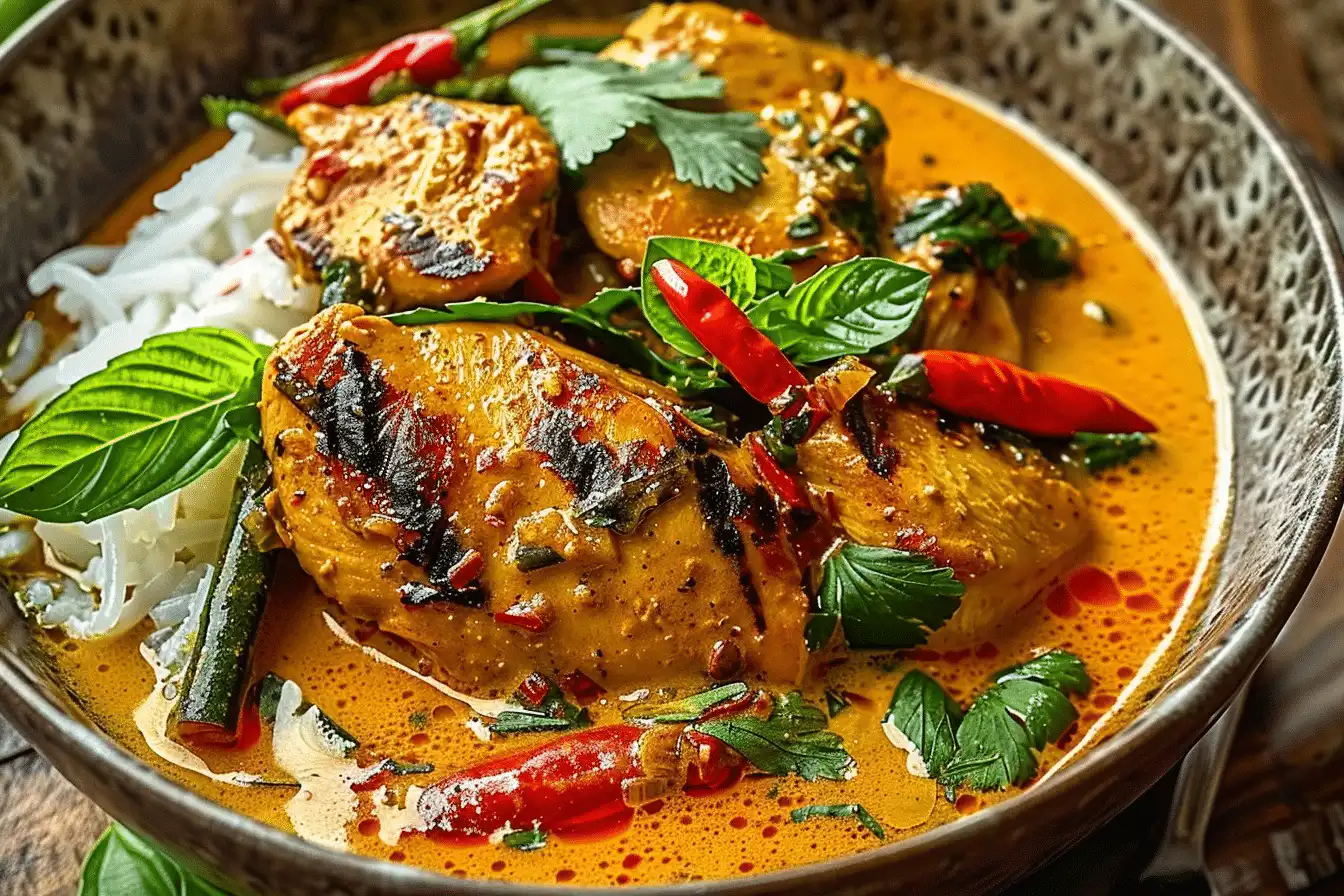
Lemongrass Chicken With Thai Coconut Curry is a fragrant, savory main of lemongrass-marinated chicken simmered in red curry and creamy coconut milk.
The dish balances tangy lime, sweet brown sugar, and savory fish sauce with tender asparagus and fresh Thai basil for a fast, restaurant-quality weeknight meal.
| Prep Time | Cook Time | Total Time | Servings | Difficulty | Cuisine |
|---|---|---|---|---|---|
| 15 minutes (plus 30 min marinade) | 15 minutes | 60 minutes | 4 | Easy | Thai |
Image ALT text suggestion: Close-up of lemongrass chicken in a bowl over jasmine rice with lime wedges.
This recipe works because it layers bold aromatics and simple technique for consistent, balanced flavor.
I use a short lemongrass, garlic, and ginger marinade to infuse the chicken before searing, which locks in flavor and creates caramelized edges that carry texture into the curry.
The combination of Thai red curry paste and full-fat coconut milk gives a silky, stable sauce that clings to the meat without thinning, while fish sauce, brown sugar, and lime juice bring salty, sweet, and acidic balance every time.
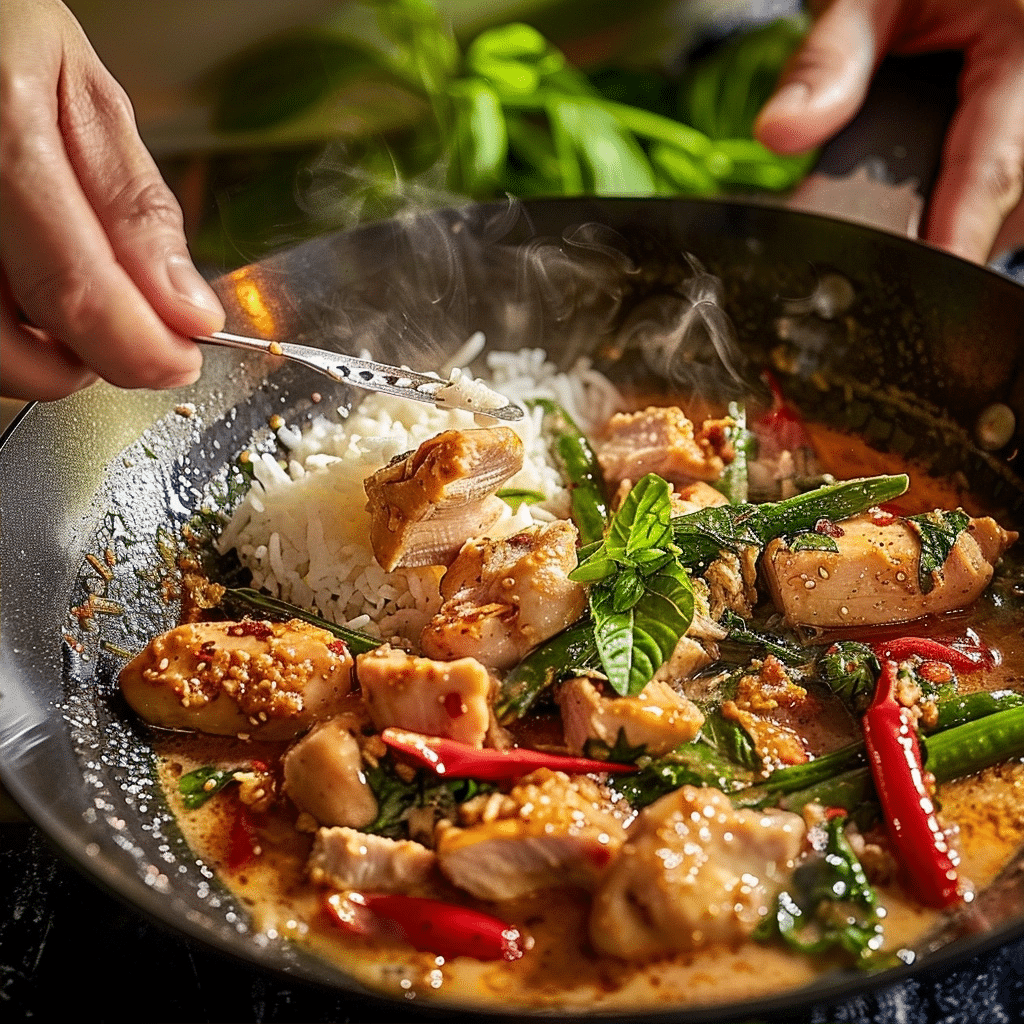
Image ALT text suggestion: A skillet with seared chicken pieces and a glossy red coconut curry simmering with asparagus.
This ingredients list provides exact measurements and practical substitutions for easy shopping.
| Ingredient | Quantity | Notes/Alternatives |
|---|---|---|
| Chicken breasts, sliced into strips | 2 large | Use boneless, skinless; thighs work for richer flavor |
| Fresh lemongrass, finely minced | 2 tablespoons | Trim and mince the tender inner stalks; jarred paste OK |
| Garlic, minced | 3 cloves | Substitute 1 teaspoon garlic paste |
| Fresh ginger, grated | 1 tablespoon | Use jarred ginger in a pinch |
| Olive oil | 1 tablespoon | Neutral oil like canola works if preferred |
| Salt | 1 teaspoon | Adjust to taste |
| Black pepper | 1/2 teaspoon | Freshly ground for best aroma |
| Coconut oil | 1 tablespoon | Use neutral oil if coconut flavor is undesired |
| Thai red curry paste | 2 tablespoons | Adjust to heat preference; green curry paste is alternative |
| Full-fat coconut milk | 1 can (13.5-14 oz) | Shake or stir for even consistency; light coconut milk thins sauce |
| Fish sauce | 1 tablespoon | Substitute soy sauce for vegetarian version |
| Brown sugar | 1 tablespoon | Palm sugar for authentic Thai flavor |
| Fresh lime juice | 1 tablespoon | Use more to taste at the end |
| Asparagus, trimmed and cut | 1 bunch | Snap off woody ends; use green beans or snap peas |
| Fresh Thai basil leaves | 1 cup | Sweet basil is acceptable but alters aroma |
| Cooked jasmine rice | 2 cups | Keep warm; basmati is a drier substitute |
| Fresh Thai chili, sliced (optional) | 1 | Adjust or omit for less heat |
| Lime wedges | For serving | Garnish with additional basil if desired |
Image ALT text suggestion: A chopping board with minced lemongrass, ginger, garlic, and sliced chicken strips ready for marinade.
These step-by-step instructions follow the provided method for reliable results.
Follow each numbered step and keep ingredients prepped ahead to maintain timing and texture.
Marinade and Rice
- Trim and finely mince the tender inner part of the lemongrass stalks.
- Combine lemongrass, garlic, ginger, olive oil, salt, and black pepper in a bowl.
- Add the sliced chicken and coat well with the marinade; let it rest for at least 30 minutes.
- Cook the jasmine rice according to package instructions and keep warm.
Cook the Chicken and Build the Curry
- Heat coconut oil in a large skillet over medium-high heat.
- Sear the marinated chicken until golden brown and lightly charred on the edges; remove and set aside.
- Add the red curry paste to the same skillet and cook for 1 minute until fragrant.
- Pour in the coconut milk and stir until smooth and creamy.
- Add fish sauce, brown sugar, and lime juice and stir well.
- Add asparagus and simmer for several minutes until tender-crisp.
- Return the chicken to the skillet and simmer gently until fully cooked and coated in the curry sauce.
- Stir in the Thai basil right before serving.
- Serve hot over jasmine rice and garnish with sliced chili and lime wedges if desired.
Image ALT text suggestion: Final plated bowl of lemongrass chicken with coconut curry over jasmine rice garnished with basil and lime.
These chef tips help refine texture, release aroma, and ensure consistent doneness.
- Sear chicken in a hot skillet without overcrowding to develop a golden crust; cook in batches if needed for even browning.
- Use full-fat coconut milk for a rich, stable sauce; if the sauce separates, simmer gently and whisk until emulsified.
- Trim asparagus diagonally for larger surface area; add later in cooking to keep it tender-crisp, about 3 to 5 minutes.
- Taste and adjust seasoning after adding coconut milk; balance with additional fish sauce for salt, sugar for sweetness, or lime juice for acidity.
- Add Thai basil off heat to preserve its bright aroma and prevent bitterness from prolonged cooking.
- If using chicken thighs, reduce simmer time slightly since they retain moisture better.
These common mistakes cause texture or flavor issues and show how to prevent them.
- Overcrowding the pan prevents browning and causes steaming; fix by working in batches and ensuring space between pieces.
- Using light coconut milk yields a thin, less creamy sauce; use full-fat coconut milk for body and silkiness.
- Cooking asparagus too long makes it mushy; add it during the final simmer and test for tender-crisp texture.
- Adding basil too early dulls its scent; stir basil in just before serving to keep flavor fresh.
- Under-seasoning after the coconut milk dilutes seasoning; always re-taste and adjust salt, sugar, or acid at the end.
These variations and substitutions keep the core flavor while accommodating preferences.
| Ingredient | Substitution | Flavor/Texture Impact |
|---|---|---|
| Chicken breasts | Chicken thighs | Richer flavor and more forgiving texture; slightly longer cook time for thighs |
| Thai red curry paste | Green curry paste or panang paste | Green adds herbal heat; panang is tangier and nuttier |
| Fish sauce | Soy sauce or tamari (vegetarian) | Preserves saltiness but loses umami depth from fish sauce |
| Asparagus | Green beans, snap peas, or broccoli florets | Similar snap and color; adjust cooking time for firmness |
| Full-fat coconut milk | Coconut cream thinned with water | Even richer and thicker; dilute to match desired sauciness |
Image ALT text suggestion: A trio of bowls showing alternative vegetables and proteins for the curry.
These serving suggestions and pairings enhance the meal for different occasions.
Serve the curry over steaming jasmine rice and top with Thai basil, sliced Thai chili, and lime wedges for brightness.
Pair the dish with a simple cucumber salad or pickled vegetables to cut richness, and offer steamed greens for balance. For beverages, try a fragrant jasmine tea or a nonalcoholic ginger-lime spritzer. Use this curry for weeknight dinners, casual dinner parties, and festive gatherings where bold, shareable flavors work well.
- Side dishes: Cucumber salad, pickled carrots, steamed bok choy
- Drinks: Jasmine tea, iced lemongrass tea, nonalcoholic ginger-lime spritzer
- Garnishes: Fresh Thai basil, sliced chilies, lime wedges, toasted coconut flakes
- Occasions: Weeknight dinners, casual dinner parties, festive holiday spreads with Southeast Asian themes
Image ALT text suggestion: A styled table showing the curry with cucumber salad and garnishes ready to serve.
These storage and reheating methods preserve texture and flavor for best leftovers.
| Method | Duration | Instructions |
|---|---|---|
| Refrigerate | 3 to 4 days | Cool to room temperature within 2 hours, store in an airtight container, reheat gently on the stove over low-medium heat. |
| Freeze | 2 to 3 months | Freeze in portioned airtight containers; thaw overnight in the refrigerator before reheating to avoid splitting the sauce. |
| Reheat | N/A | Reheat on the stovetop over low heat, stirring occasionally; add a splash of coconut milk or water if sauce has thickened. |
Image ALT text suggestion: Leftover curry stored in a clear container with a label showing the date.
This nutritional information provides approximate per-serving values for planning.
| Nutrient | Amount per Serving |
|---|---|
| Calories | 520 kcal |
| Protein | 34 g |
| Fat | 32 g |
| Carbohydrates | 28 g |
| Fiber | 3 g |
| Sugar | 6 g |
| Sodium | 820 mg |
Approximate values.
Image ALT text suggestion: Nutrition facts style layout next to a bowl of the curry and rice.
These frequently asked questions answer common reader concerns about the recipe and technique.
Can I substitute chicken breasts in lemongrass chicken with thighs?
Yes, you can substitute chicken thighs for chicken breasts in lemongrass chicken with thighs. Thighs deliver richer flavor and remain juicier with slightly longer cooking time. Reduce simmer time once returned to the sauce if thighs are particularly thick to avoid overcooking. This swap increases tenderness and depth of flavor.
How do I know when lemongrass chicken is fully cooked and safe to eat?
Cook the chicken until it reaches an internal temperature of 165 degrees Fahrenheit for safe doneness. Check the thickest piece with an instant-read thermometer and ensure juices run clear with no pink centers. Sear pieces to develop color and finish simmering in the sauce to carry heat through. Allow resting for a few minutes off the heat to lock in juices.
What should I do if my Thai coconut curry tastes too salty or too sweet?
If the curry tastes too salty, balance it with a squeeze of fresh lime juice and a small pinch of brown sugar to soften the saltiness. If it tastes too sweet, add a splash of fish sauce and more lime juice to increase savory and acidic notes. Simmer briefly between adjustments and taste often to avoid overshooting the balance. Gradual additions keep flavor on target.
Can I make lemongrass chicken with Thai coconut curry ahead of time?
Yes, you can make the lemongrass chicken with Thai coconut curry ahead and refrigerate for up to four days. Cool to room temperature, store in airtight containers, and reheat gently on the stovetop over low heat, adding a splash of coconut milk if the sauce thickens. For freezer storage, portion and freeze up to three months and thaw overnight before reheating. Make-ahead steps let flavors meld for even richer taste.
How should I store leftovers from lemongrass chicken Thai coconut curry?
Store leftovers in airtight containers in the refrigerator for 3 to 4 days or freeze up to 2 to 3 months. Cool the curry to room temperature within two hours before sealing and refrigerating to preserve texture and safety. Thaw frozen portions in the refrigerator overnight and reheat gently on the stove. Avoid microwaving at high power to prevent the coconut milk from separating.
This recipe summarizes a straightforward, flavorful approach to a restaurant-style lemongrass chicken curry that you can make at home.
Lemongrass Chicken With Thai Coconut Curry brings fragrant lemongrass-marinated chicken together with creamy coconut and bright lime for a balanced, crowd-pleasing meal. Prepare the quick marinade, sear the chicken, and simmer with asparagus and basil for a dependable weeknight showstopper. Try it with warm jasmine rice and a squeeze of lime to finish with bright, herbal flavor.
Image ALT text suggestion: Final serving shot with a wedge of lime and torn Thai basil over the curry for a vivid, flavor-forward close.
Internal links: Easy Thai Curries, Perfect Jasmine Rice, Weeknight Dinners.
External resources: Serious Eats, USDA.

Lemongrass Chicken With Thai Coconut Curry
Ingredients
- 2 large chicken breasts (boneless, skinless), thinly sliced
- 2 tablespoons finely minced fresh lemongrass (or jarred paste)
- 3 cloves garlic (or 1 tsp garlic paste)
- 1 tablespoon grated fresh ginger
- 1 tablespoon olive oil
- 1 teaspoon salt
- 1/2 teaspoon black pepper
- 1 tablespoon coconut oil (or neutral oil)
- 2 tablespoons Thai red curry paste (adjust for heat)
- 1 can full-fat coconut milk (13.5-14 oz)
- 2 tablespoons lime juice
- 1 tablespoon brown sugar
- 1/4 cup fish sauce
- 1 bunch asparagus (trimmed and cut into thirds lengthwise)
- Fresh Thai basil leaves (optional, for garnish)
Instructions
- Combine chicken strips with lemongrass, garlic, ginger, olive oil, salt, and black pepper in a bowl. Marinate 30 minutes.
- Heat coconut oil in a large skillet over medium-high. Sear chicken 3-4 minutes per side until golden; remove from skillet.
- Add curry paste to skillet, sauté 1 minute. Pour in coconut milk and stir to blend.
- Return chicken to the pan. Stir in lime juice, brown sugar, and fish sauce. Simmer 5-7 minutes until sauce thickens.
- Add asparagus and simmer another 3 minutes until tender. Garnish with Thai basil.
Notes
Adjust curry paste amount based on spice preference
Use asparagus alternatives like bell peppers or snap peas if needed
Leftovers refrigerate well up to 3 days; sauce thickens when chilled