
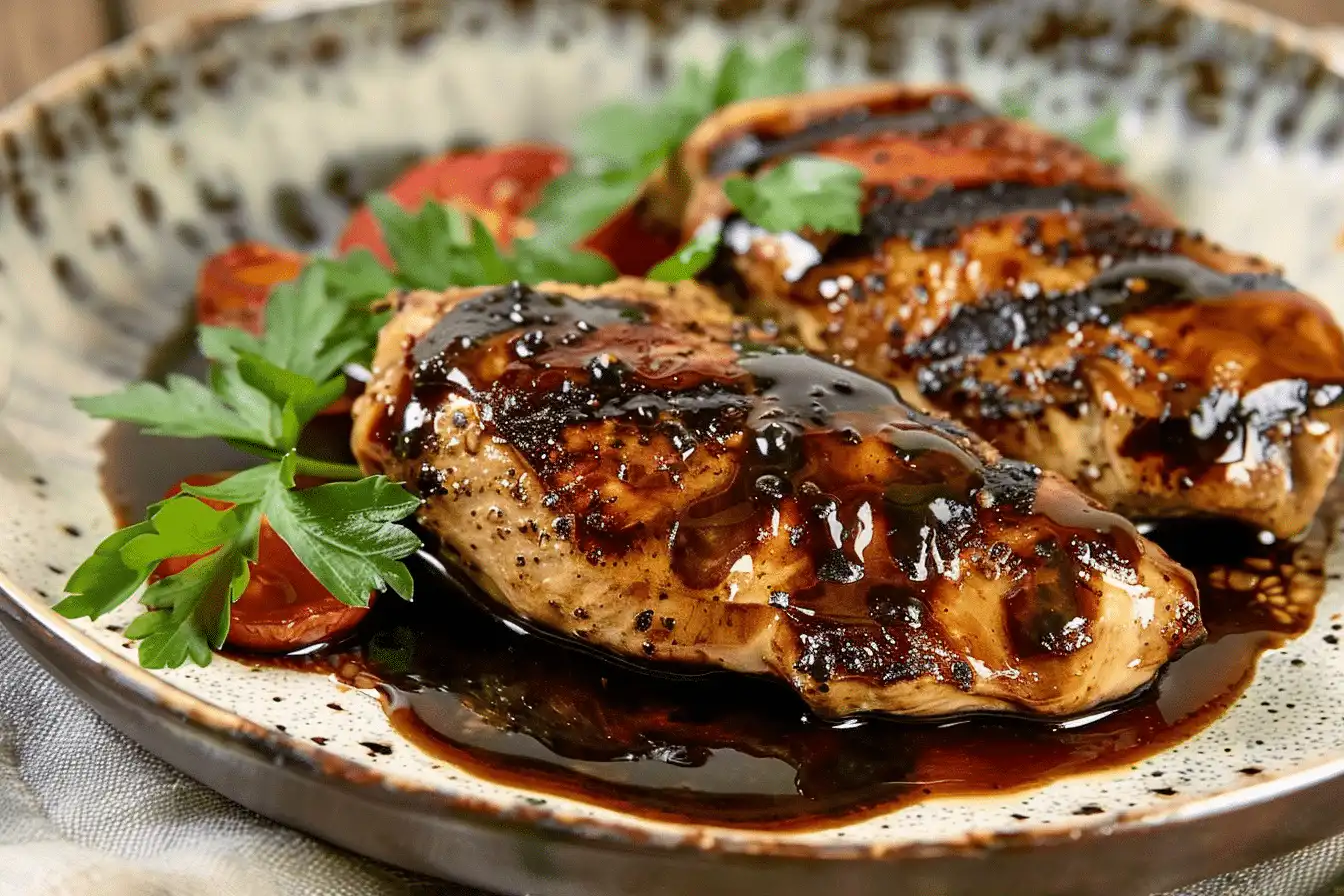
Balsamic Chicken is a seared-braised chicken breast recipe finished in a glossy, tangy balsamic glaze using chicken broth and a touch of sugar to balance the acidity. This version uses a quick 20-minute marinade and skillet technique to deliver juicy chicken and a reduced sauce in under an hour. The dish highlights savory herbs, bright balsamic, and caramelized edges for dependable weeknight results.
| Prep Time | Cook Time | Total Time | Servings | Difficulty | Cuisine |
|---|---|---|---|---|---|
| 30 minutes (includes marinating) | 19 minutes | 49 minutes | 4 | Easy | Italian-American |
Why This Recipe Works
This recipe works because the brief marinade infuses the chicken with balanced acidity and a hint of sweetness while remaining quick. I rely on the interplay of searing and deglazing to create both texture and a concentrated glaze that clings to the chicken.
I find that browning builds flavor and the reserved marinade, when reduced, transforms into a shiny coating with layered savory and sweet notes. The simple ingredient list keeps the technique approachable and the results consistent for repeat dinners.
Image ALT text suggestion: Close-up of a seared chicken breast glazed in balsamic sauce, showing caramelized edges and herb flecks.
Ingredients
This ingredients list answers what you need to make the balsamic chicken exactly as written. All components are pantry-friendly and allow for practical swaps without compromising flavor.
| Ingredient | Quantity | Notes/Alternatives |
|---|---|---|
| Chicken broth | ½ cup | Use low-sodium broth to control salt; vegetable broth ok for lighter flavor |
| Balsamic vinegar | ⅓ cup | Use aged balsamic for richer flavor or regular for budget-friendly option |
| White sugar | 2 tablespoons | Substitute honey or maple syrup for a more complex sweetness |
| Dried Italian herb seasoning | 1 teaspoon | Or use 1 tablespoon fresh chopped herbs (thyme, oregano, basil) |
| Garlic, minced | 1 clove | Use 1/2 teaspoon garlic powder if fresh garlic is unavailable |
| Skinless, boneless chicken breasts | 4 halves | Pound to even thickness for uniform cooking; chicken thighs are a juicier alternative |
| Olive oil | 1 tablespoon | Use avocado oil for higher smoke point if preferred |
Image ALT text suggestion: Ingredients arranged in bowls on a wooden board including balsamic vinegar, chicken broth, garlic, and herbs.
Step-by-Step Instructions
This section answers how to execute the recipe with clear, sequential actions to ensure perfect balsamic chicken every time. Follow each numbered step for best results.
Marinating
- Gather the ingredients.
- Whisk chicken broth, balsamic vinegar, sugar, Italian seasoning, and garlic together in a bowl.
- Place chicken breasts in marinade; let marinate for 10 minutes on each side.
Cooking
- Heat olive oil in a large skillet over medium-high heat.
- Remove chicken from marinade; reserve marinade.
- Place chicken in the hot skillet and cook until browned and no longer pink inside, about 7 minutes per side.
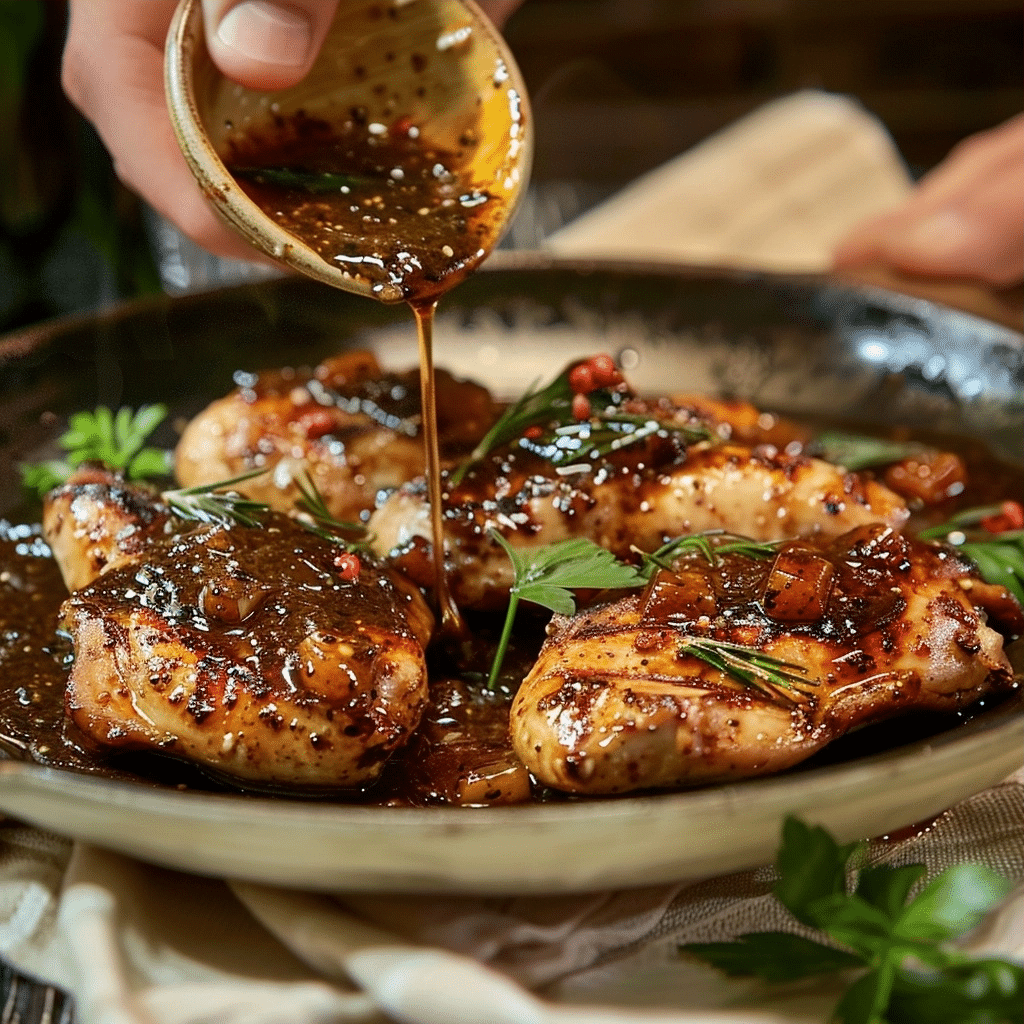
- Pour marinade into the skillet.
- Cook until sauce thickens slightly, turning chicken breasts over once or twice, about 5 minutes.
- Check doneness with an instant-read thermometer; it should read at least 165 degrees F (74 degrees C) in the center.
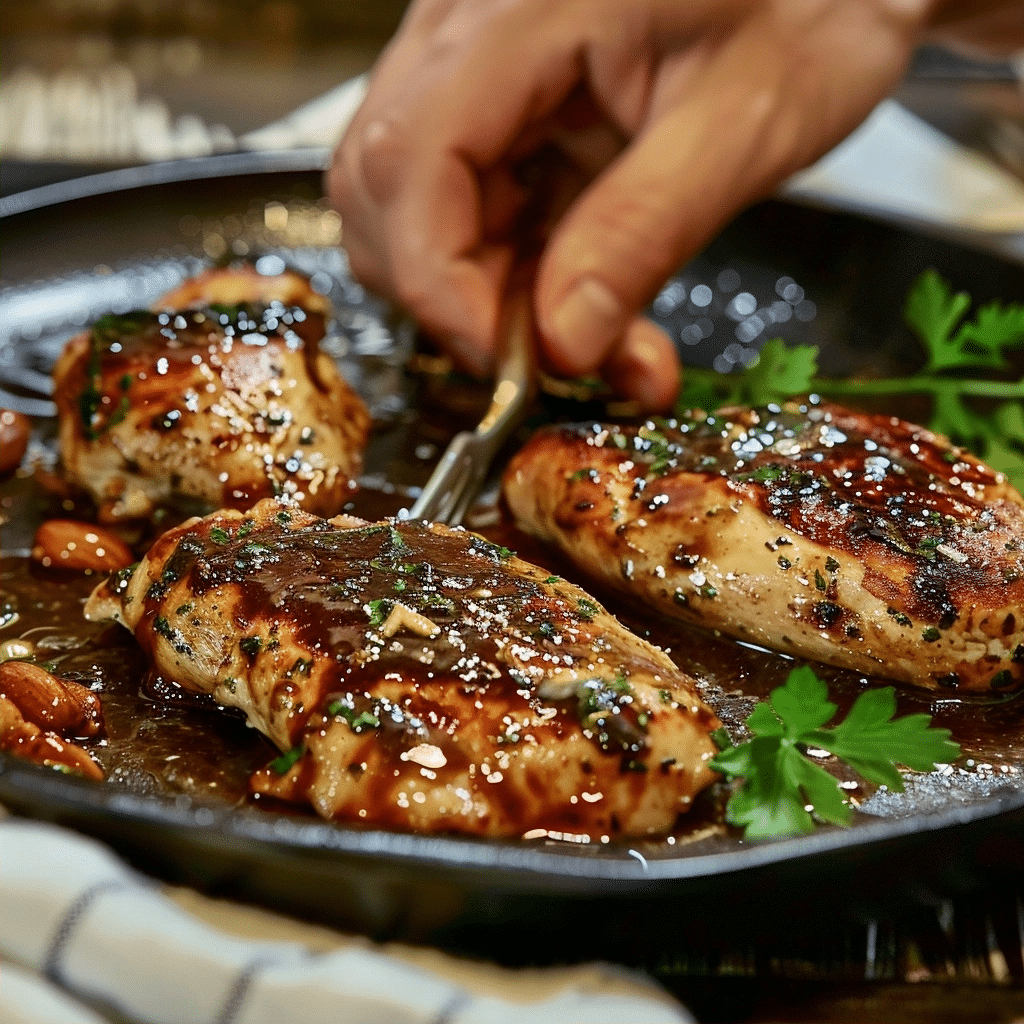
Image ALT text suggestion: Step-by-step shots showing chicken in a skillet with reserved marinade being poured in to form a glaze.
Chef Tips for Perfect Results
This section answers what professional techniques improve the dish and gives practical cues to achieve consistent textures. Use these tips to elevate simple ingredients into a polished main course.
- Pat the chicken dry before marinating to promote a better sear; moisture prevents browning and reduces caramelization.
- Pound thicker breasts to an even ¾-inch thickness for uniform cooking; uneven pieces lead to overcooked edges and undercooked centers.
- Heat the skillet until shimmering before adding oil and chicken; a properly hot pan sears quickly and locks in juices.
- Reserve and reduce the marinade as directed, but bring it to a full simmer to ensure any raw chicken juices are cooked through.
- Use an instant-read thermometer to confirm 165 degrees F (74 degrees C); visual cues alone can be misleading.
- Finish with a few turns of cracked black pepper and a sprinkle of fresh chopped parsley or basil for color and brightness.
Image ALT text suggestion: Close-up of a thermometer inserted into the thickest part of a chicken breast registering 165°F.
Common Mistakes to Avoid
This section answers the typical errors and how to prevent them, keeping your balsamic chicken juicy and well-textured. Avoid these pitfalls for reliable results.
- Overcrowding the skillet: Placing too many breasts at once cools the pan and causes steaming instead of searing. Cook in batches if necessary and keep finished chicken warm in a low oven.
- Skipping the thermometer: Relying on color alone can result in undercooked centers. Use an instant-read thermometer to ensure safety and avoid dryness.
- Using too high heat when reducing the sauce: Excessive heat can burn the sugars in the balsamic and sugar, producing a bitter flavor. Lower the heat and simmer gently until the sauce thickens slightly.
- Marinating for too long with acid: Extended exposure to vinegar can toughen chicken by denaturing proteins too aggressively. Stick to brief marinating times or use a milder marinade for longer rests.
Image ALT text suggestion: Overcrowded skillet with chicken steaming rather than searing, showing pale, uncaramelized surfaces.
Variations and Substitutions
This section answers how to adapt the recipe for different dietary needs and flavor preferences while explaining the impact on texture and taste. Use the table to swap ingredients confidently.
| Ingredient | Substitution | Flavor/Texture Impact |
|---|---|---|
| Chicken breasts | Bone-in chicken thighs | Thighs yield juicier, more forgiving results with slightly richer flavor and longer cook time |
| White sugar | Honey or maple syrup | Provides deeper caramel notes; honey may brown faster, so reduce heat slightly |
| Balsamic vinegar | Red wine vinegar plus a touch of honey | Brighter acidity with less sweetness; add sweetener to balance |
| Olive oil | Avocado oil | Higher smoke point for stronger heat without burning |
| Italian seasoning | Fresh thyme and rosemary | Brighter herb aroma; increase quantity for fresh herbs |
Image ALT text suggestion: Three plated variations of balsamic chicken showing thigh option, honey-sweetened glaze, and herb-topped chicken.
Serving Suggestions and Pairings
This section answers what to serve with balsamic chicken and offers pairing ideas for specific occasions. Combine textures and flavors for a complete, balanced plate.
Serve the chicken over creamy mashed potatoes, buttery polenta, or garlic-infused pasta to soak up the glaze. Add a crisp green salad or roasted seasonal vegetables to complement the sweet-tart sauce and cut through richness.
Pair with a chilled sparkling water with lemon for a non-alcoholic beverage or an herbal iced tea for casual dinners. For holidays or dinner parties, present the chicken with a herb-roasted vegetable platter and a simple caprese salad to echo the Italian flavors.
Internal links: Simple Side Dishes, Summer Salads, Grilled Vegetables.
Image ALT text suggestion: Plated balsamic chicken with roasted asparagus and mashed potatoes, garnished with fresh herbs.
Storage and Reheating
This section answers how to store leftover balsamic chicken safely and reheat it to retain texture and flavor. Follow these methods to preserve quality for multiple meals.
| Method | Duration | Instructions |
|---|---|---|
| Refrigerator | 3 to 4 days | Cool to room temperature within two hours, store in airtight container. Reheat gently in a skillet over low heat with a splash of broth to loosen the sauce. |
| Freezer | Up to 3 months | Freeze in a single layer on a tray, then transfer to a freezer bag. Thaw overnight in the fridge and reheat as above to preserve texture. |
| Reheating (oven) | 10 to 15 minutes | Cover with foil and bake at 325 degrees F until warmed through. Add a few tablespoons of broth to keep meat moist. |
Image ALT text suggestion: Leftover balsamic chicken in an airtight container beside a labeled freezer bag.
Nutritional Information
This section answers what to expect nutritionally per serving to help with meal planning and dietary tracking. Values are estimated and intended for general guidance.
| Nutrient | Amount per Serving |
|---|---|
| Calories | ~370 kcal |
| Protein | 34 g |
| Fat | 10 g |
| Carbohydrates | 22 g |
| Fiber | 0.5 g |
| Sugar | 14 g |
| Sodium | ~420 mg |
Approximate values.
Image ALT text suggestion: Nutrition facts style layout next to a plated serving of balsamic chicken.
Frequently Asked Questions
This FAQ section answers common concerns from substitutions to storing leftovers, each addressing a specific long-tail search intent related to balsamic chicken.
Balsamic chicken substitutions for balsamic vinegar?
Use red wine vinegar plus a little honey as a direct substitute for balsamic vinegar in this recipe. The acidity will be brighter, so add 1 teaspoon of sweetener to approximate the balsamic sweetness. This swap slightly changes the glaze intensity but preserves balance.
How to tell when balsamic chicken is done and safe to eat?
Check doneness by inserting an instant-read thermometer into the thickest part of the breast; it must read at least 165 degrees F (74 degrees C). The juices should run clear and the meat should feel firm but springy to the touch. Visual checks can help but thermometer confirmation prevents undercooking.
Why is my balsamic chicken sauce too thin and how can I fix it?
The sauce stays thin if you do not simmer it long enough to reduce and concentrate the liquids. Simmer the reserved marinade in the skillet for several minutes over medium-low heat until it coats the back of a spoon. If you need faster thickening, mix 1 teaspoon cornstarch with 1 tablespoon cold water and whisk into the sauce, simmering until glossy.
Can I make-ahead balsamic chicken for meal prep?
Yes, you can marinate the chicken up to 2 hours ahead and refrigerate before cooking for meal prep convenience. Cook the chicken and let it cool, then store in airtight containers for up to 4 days in the refrigerator. Reheat gently to preserve moisture and finish with a fresh splash of balsamic if desired.
How should I store and reheat leftover balsamic chicken for dinner later?
Store leftovers in an airtight container in the refrigerator for 3 to 4 days or freeze for up to 3 months. Reheat gently in a skillet with a splash of chicken broth or in a 325 degrees F oven covered with foil until warmed through to avoid drying out the meat.
Image ALT text suggestion: FAQ section illustrated by small icons representing storage, thermometer, and sauce consistency.
Conclusion
This balsamic chicken delivers a fast, flavorful main course using a short marinade and a skillet reduction to create a glossy, tangy glaze. The technique emphasizes a hot sear, careful reduction, and an instant-read thermometer for reliable results. Try this recipe tonight and enjoy a bright, caramelized finish that complements many sides and occasions.
End with a final spoonful of the slightly sweet balsamic glaze for a memorable bite that balances tang and savory depth.

Balsamic Chicken with Tangy Balsamic Glaze and Garlic
Ingredients
- ½ cup chicken broth
- ⅓ cup balsamic vinegar
- 2 tablespoons white sugar
- 1 teaspoon dried Italian herb seasoning
- 1 clove garlic, minced
- 4 skinless, boneless chicken breasts
- 1 tablespoon olive oil
Instructions
- Preheat oven to 350°C (175°F). Pat chicken dry; season with herb seasoning. Heat olive oil in a skillet over medium-high. Sear chicken 3-4 minutes per side; transfer to oven. Combine broth, balsamic, sugar, and garlic in skillet; bring to boil. Reduce by half (5-7 minutes), then baste chicken with glaze. Bake 8-10 minutes.