

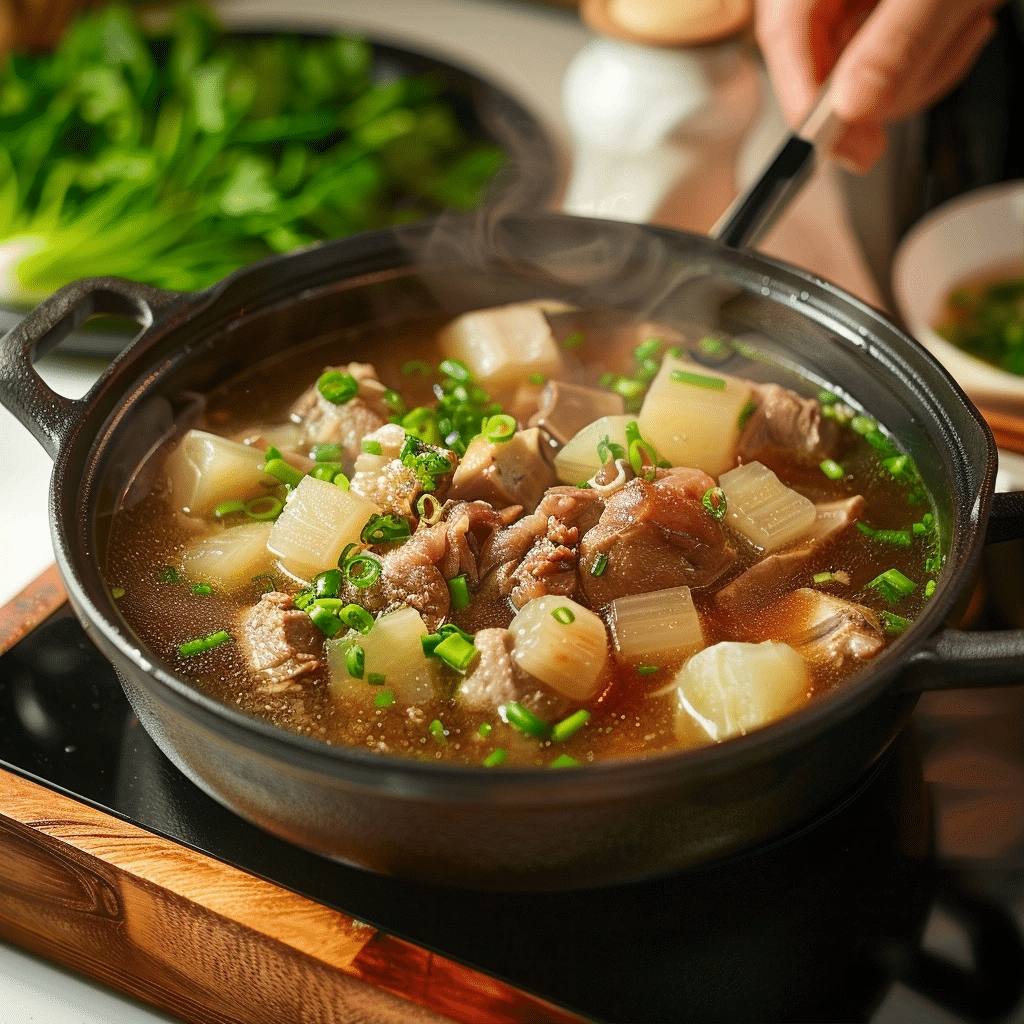
Taiwanese Pork Rib and Daikon Soup – Healthy Recipe provides a clean, nourishing bowl of goodness featuring tender bone-in ribs and sweet radish. This traditional dish emphasizes natural ingredients that work together to create a light yet deeply savory broth. Mastering this soup requires minimal effort but delivers maximum satisfaction, making it a perfect staple for weeknight family meals or restorative weekend lunches.
| Prep Time | Cook Time | Total Time | Servings | Difficulty | Cuisine |
|---|---|---|---|---|---|
| 15 mins | 60 mins | 75 mins | 4 | Easy | Taiwanese |
Why This Recipe Works
I rely on this soup whenever I need a comforting meal that doesn’t feel heavy or overly complicated. The magic happens during the long, slow simmer, which allows the daikon radish to absorb the savory essence of the ribs while releasing its own natural sweetness. The combination of ginger and garlic cuts through the richness of the meat, creating a balanced flavor profile that tastes like home.
You will love how the daikon softens into a melt-in-your-mouth texture while the ribs become tender enough to fall off the bone. This recipe is incredibly reliable because it uses a simple blanching technique that ensures the final broth remains crystal clear and visually inviting. It is a straightforward approach to home cooking that prioritizes quality ingredients over excessive processing.
Ingredients
| Ingredient | Quantity | Notes/Alternatives |
|---|---|---|
| Pork Ribs | 1 lb | Cut into 1-inch chunks |
| Daikon Radish | 1 lb | Peeled and cubed |
| Ginger | 1 inch | Thinly sliced |
| Garlic | 5 cloves | Peeled and smashed |
| Water | 2 Liters | Adjust for desired consistency |
| Salt | 2 tsp | Add to taste |
| White Pepper | 1 tsp | Adds a subtle, earthy heat |
| Cilantro/Scallion | Optional | Fresh garnish |
Step-by-Step Instructions
Preparing the Ribs
- Place pork ribs into a large pot and cover with cold water.
- Bring the water to a boil over high heat for 3-4 minutes to release impurities.
- Drain the liquid and rinse the pork ribs under cold running water.
Simmering the Soup
- Return the cleaned ribs to the pot together with daikon, ginger, and garlic.
- Pour in 2L of water until all ingredients are fully submerged.
- Bring the pot back to a boil, then immediately reduce the heat to a low simmer.
- Cover with a lid and cook for 45 to 60 minutes until the meat is tender.
- Season with salt and white pepper according to your preference.
- Garnish with fresh cilantro or scallions before serving hot.
Chef Tips for Perfect Results
- Blanching the pork is non-negotiable if you want a clear, professional-looking broth.
- Always start with cold water for the initial boil to ensure impurities are pushed out effectively.
- Slice your daikon into uniform chunks to ensure they cook evenly and maintain their shape without disintegrating.
- Slightly crush the garlic cloves with the side of a knife to release more flavor into the soup base.
- Taste the broth at the 45-minute mark and adjust your salt levels gradually as the liquid reduces.
- Allow the soup to rest for five minutes off the heat after seasoning to let the flavors marry.
Common Mistakes to Avoid
- Failing to skim the top of the pot during the initial boil can result in a cloudy broth.
- Adding too much water initially makes the soup flavor diluted, so keep it just submerged until the end.
- Over-salting early in the cooking process is bad because the liquid reduces and concentrates the salt.
- Cutting the daikon too small causes it to turn to mush before the pork is tender.
- Rushing the simmer time prevents the pork from becoming tender and the daikon from becoming fully translucent.
Variations and Substitutions
| Ingredient | Substitution | Flavor/Texture Impact |
|---|---|---|
| Pork Ribs | Chicken thighs | Lighter, milder flavor profile |
| Daikon | Turnips | Slightly earthier with a denser bite |
| White Pepper | Black Pepper | A sharper, more pungent heat |
Serving Suggestions and Pairings
Serve this soup in deep ceramic bowls alongside a side of steamed jasmine rice to soak up the savory broth. It pairs wonderfully with stir-fried leafy greens or a simple cucumber salad to provide a fresh contrast. For a festive touch, serve during lunar celebrations as a symbol of health and longevity. A side of mild chili oil or soy sauce can be provided for those who prefer an extra kick.
Storage and Reheating
| Method | Duration | Instructions |
|---|---|---|
| Refrigerator | 3-4 days | Store in an airtight container |
| Freezer | Up to 1 month | Freeze in portion-sized bags |
| Reheating | 10 minutes | Simmer gently on the stove until hot |
Nutritional Information
| Nutrient | Amount per Serving |
|---|---|
| Calories | 280 kcal |
| Protein | 22g |
| Fat | 15g |
| Carbohydrates | 12g |
Approximate values.
Frequently Asked Questions
Can I use other parts of a pork if ribs are not available?
You can substitute pork neck bones or meaty center-cut pork loin pieces for this soup. These cuts provide similar collagen to create a rich, silky texture in the broth. Adjust the simmer time slightly if the meat cuts are thinner to avoid overcooking.
How do I know when the daikon is fully cooked?
The daikon is fully cooked once it reaches a translucent, semi-clear appearance and becomes very soft to the touch with a fork. It should offer zero resistance when pierced throughout the center. It will absorb the color of the broth and look slightly glassy when ready.
Is this soup suitable for meal prep?
This soup stores exceptionally well and often tastes even better the next day after the flavors have concentrated. Keep the soup in the refrigerator in an airtight container for up to four days. Reheat only the portion you intend to eat by bringing it to a gentle boil on the stove.
Can I make this recipe faster in a pressure cooker?
You can certainly use a pressure cooker to speed up the process by cooking on high for 20 minutes followed by natural release. This method drastically reduces the time required for the meat to become tender while keeping the daikon intact. The results are comparable to the stovetop method in both flavor and texture.
Why is my broth turning cloudy?
Cloudiness occurs when the initial blanching step is skipped or when the heat is too high during the simmering phase. Ensure you boil the ribs long enough to remove the initial scum and keep the heat at a steady, low simmer rather than a rolling boil. A gentle simmer is the secret to maintaining a beautiful, clear, and professional-looking broth.
This Taiwanese Pork Rib and Daikon Soup – Healthy Recipe is a simple yet effective way to bring authentic, restorative flavors into your kitchen. By following the gentle simmering process, you ensure a clean broth and tender ingredients every time. Enjoy the process of preparing this wholesome dish, and savor the comforting, savory depth in every spoonful.